01 · The situation
One catalog, two kinds of buyer, one sales team.
Total Body Experts sells commercial-grade fitness equipment to two very different buyers. On one side: gyms, fire and police stations, apartment buildings, offices and schools, buying ten or twenty machines at a time. On the other: homeowners buying one or two pieces for a home gym.
Both go through the same consultative sales team, who close by phone. That makes the team's time the scarce resource. Every call to someone who was never going to buy is a call not made to someone who was.
Before this build, the ads sent people into Instagram direct messages with a keyword to reply with. On the business side, that produced conversations, not qualified buyers.
The founder asked for something specific: a way to qualify people before they reached the sales team.
02 · The idea
Let the buyer qualify themselves.
A contact form collects a name and a phone number. A rep then spends the first call finding out what the person wants, how big the job is and when they need it. Often the answer is "not really, not yet."
We moved those questions in front of the contact details. The ad sends people to a short survey about their facility. By the time they give a phone number, they've already told us what they're equipping, how many pieces, how much space, and when. Those answers do three jobs at once:
- They score the lead as hot, warm or cold before anyone picks up the phone.
- They travel with the lead, so the rep's first call starts with context instead of discovery.
- They give the prospect something back: an equipment plan built from their own answers, sent the moment they finish.
Fig. 1 — The whole system on one line.
03 · The survey
Seven steps, and why each one is there.
Every question earns its place by telling the sales team something they would otherwise have to ask on the phone. The order matters as much as the questions.
- What type of facility are you outfitting?Fire or police station · Home gym · Apartment or HOA · Corporate office · Boutique studio · Commercial gym · School or university · OtherSorts the buyer on the first tap. A fire station and a homeowner need different equipment, a different plan and a different follow-up.
- What are you most interested in?Optional, pick several, or "skip, not sure yet"Tells the rep which product conversation to open with. Optional, because a buyer who doesn't know yet shouldn't be pushed out.
- How many pieces are you looking to start with?1–2 · 3–5 · 6–10 · 11–20 · Over 20The single best read on the size of the order.
- Do you have a location for this facility?Yes · Still searchingSeparates buyers from planners. Someone still looking for a building isn't ordering this month.
- How big is your space?Small · Medium · Large, plus optional square footageShapes the plan and the size of the opportunity. The first draft asked for square-footage ranges; the client pushed for plain sizes before launch, and they were right.
- When do you need equipment assembled?ASAP · Within 30 days · 1–2 months · 2–3 months · Just researchingThe urgency question. It sits last on purpose: the two fastest answers qualify for free assembly, so the one question that gives something back comes right before the ask.
- Where should we send your custom gym plan?Name · Email · PhoneContact details come last. By now the person has spent a minute describing their project and has a plan waiting for them.
Homeowners take a shorter path. Piece count and location don't mean much for a home gym, so they're replaced by one question the business path doesn't need: budget.

04 · Scoring
Hot, warm, cold, decided by rules the team can read.
No black box. The score comes from the answers, with rules simple enough that any rep can check why a lead landed where it did.
| Score | Business buyer | Home buyer |
|---|---|---|
| HOT | Needs it ASAP, has a location, and either a large space or runs a gym or studio. Over 20 pieces, a location and a real timeline also counts. | The top budget band. |
| WARM | Any other real timeline. | The middle budget bands. |
| COLD | "Just researching." | The lowest band that still gets a call. |
Two rules hold the system honest: without a location a business lead can never score hot, and a big piece count can only move a lead up, never down. Home buyers below the minimum budget get the plan and a link to the shop, not a sales call.
What we learned about the score
We designed a separate follow-up for each tier: a call within the hour for hot leads, different email sequences for warm and cold. Then we launched with one sequence for everyone, to keep the first test simple.
It also freed the score for a different job: it tells the rep who to call first, and it sets the estimated value of the deal in the pipeline.
The score decides the order of the calls. It doesn't decide who gets one.
05 · What the prospect receives
A plan, not a brochure.
The moment someone finishes the survey, they see a results page and get an email with an equipment plan written from their answers. It's generated automatically, so it arrives in seconds, not the next business day. The plan includes:
- A title built around their facility, like "Your First Responder Station Equipment Plan."
- A short read-back of their project: the space, the size, the timeline.
- Four to six recommended machines, each with one line on why it fits.
- Why buy from Total Body Experts: factory-direct pricing, price matching, financing.
- A button to book a 15-minute call, the phone number, and one verified customer review.
What it leaves out matters too. The plan has no prices and no budget ranges. Early versions showed both.
The sales team asked for both to come out. The numbers now come up on the call, where a rep can explain them.
06 · What the sales team receives
A scored lead with the answers attached.
The survey is only half of it. The other half is making sure a good lead doesn't sit in an inbox. Everything lands in the CRM the sales team already works from:
- The lead is assigned in rotation across the team, and the assigned rep gets a text straight away.
- The survey answers sit on the lead's card as a note, so the rep reads the project before dialling.
- The deal goes into the pipeline with an estimated value, worked out from facility, space and piece count, or from the budget for home buyers.
- A reply moves the card into a "response required" queue and texts the rep. That queue is the day's call list.
- Booked calls send the rep the score and answers, plus a reminder 30 minutes before.
The follow-up, for everyone who doesn't book straight away
Eight messages over 14 days, texts and emails mixed. The first text goes out at five minutes, letting them know someone will call shortly.
It stops the moment they book, reply a few times, or reach the quote stage. Homeowners get their own version, built around delivery, assembly, buying once, and financing.
07 · The ads
One buyer per ad, one problem per buyer.
The campaign launched with three audiences: fire stations (targeted by job title), hotels and property managers, and a broad commercial audience. Budget moved toward whichever audiences produced qualified leads.
The creative started as static images and stayed mostly static. Each ad names one buyer and one problem that buyer already has: station gear that breaks down, juggling five equipment vendors, a stair climber that locks its screen behind a subscription, a home that needs equipment that fits the room. Video joined in July, cut as moving versions of the statics that had already proved themselves.
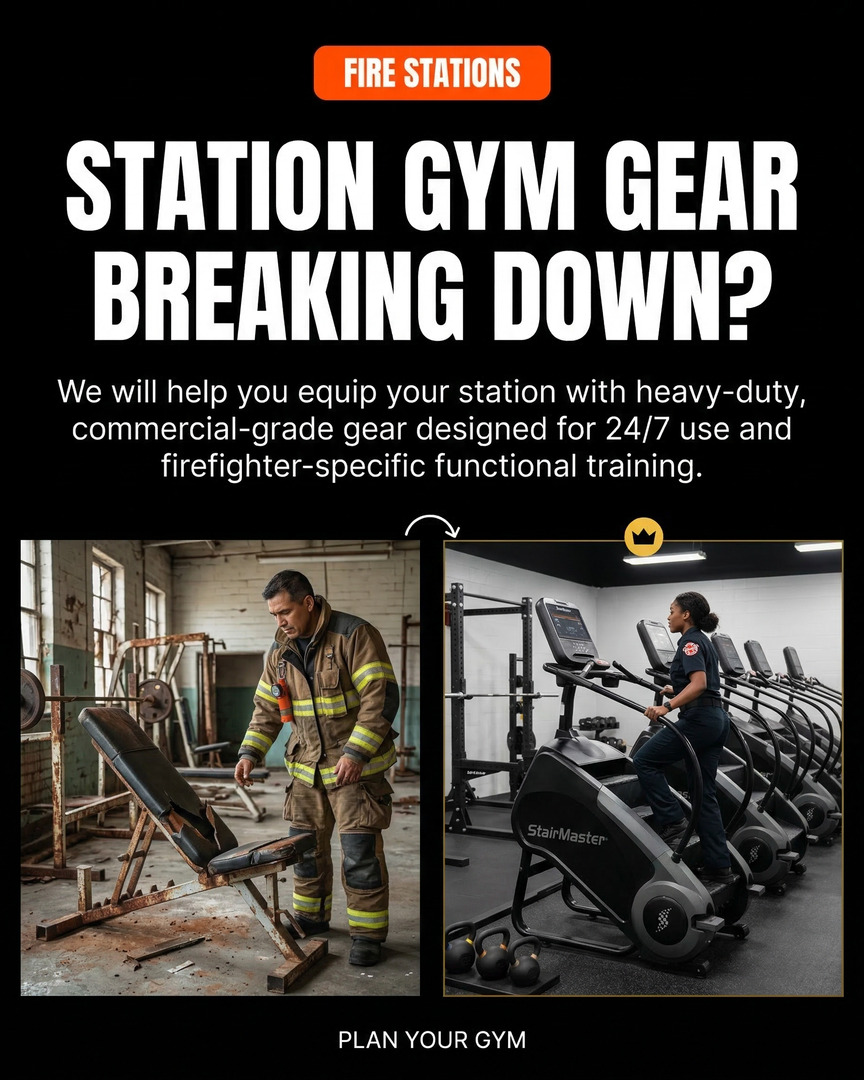
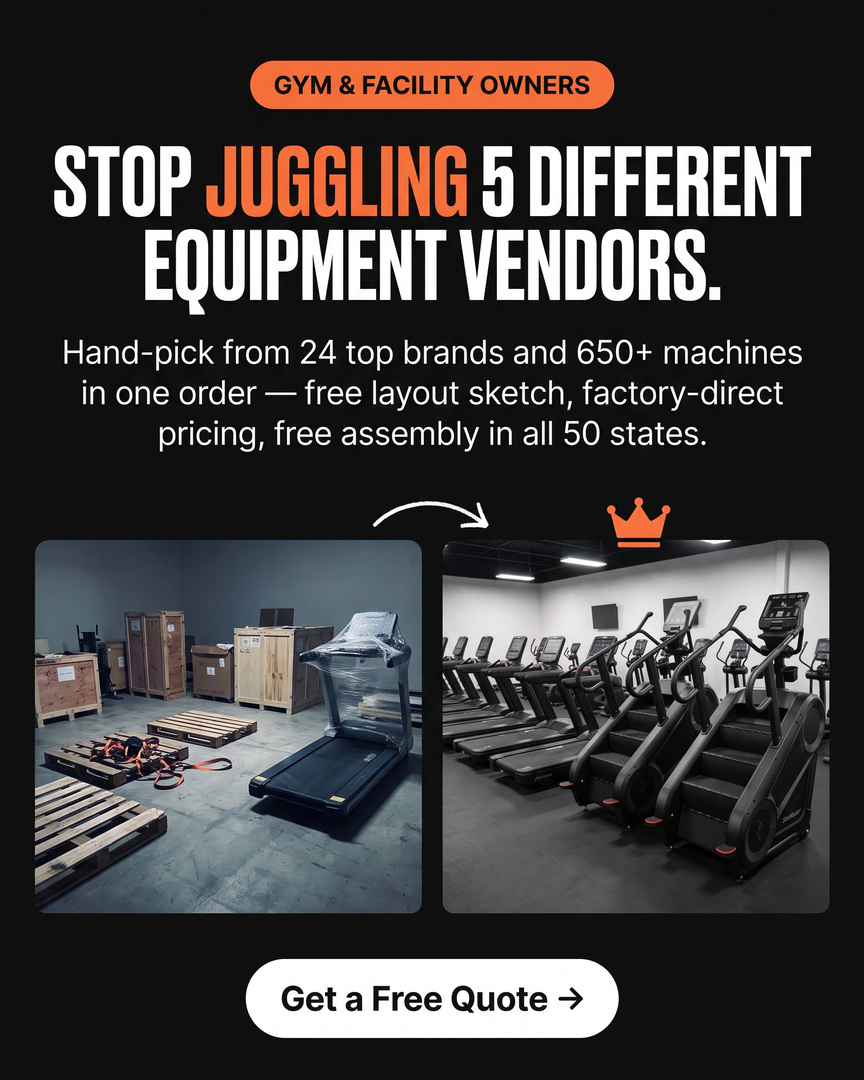
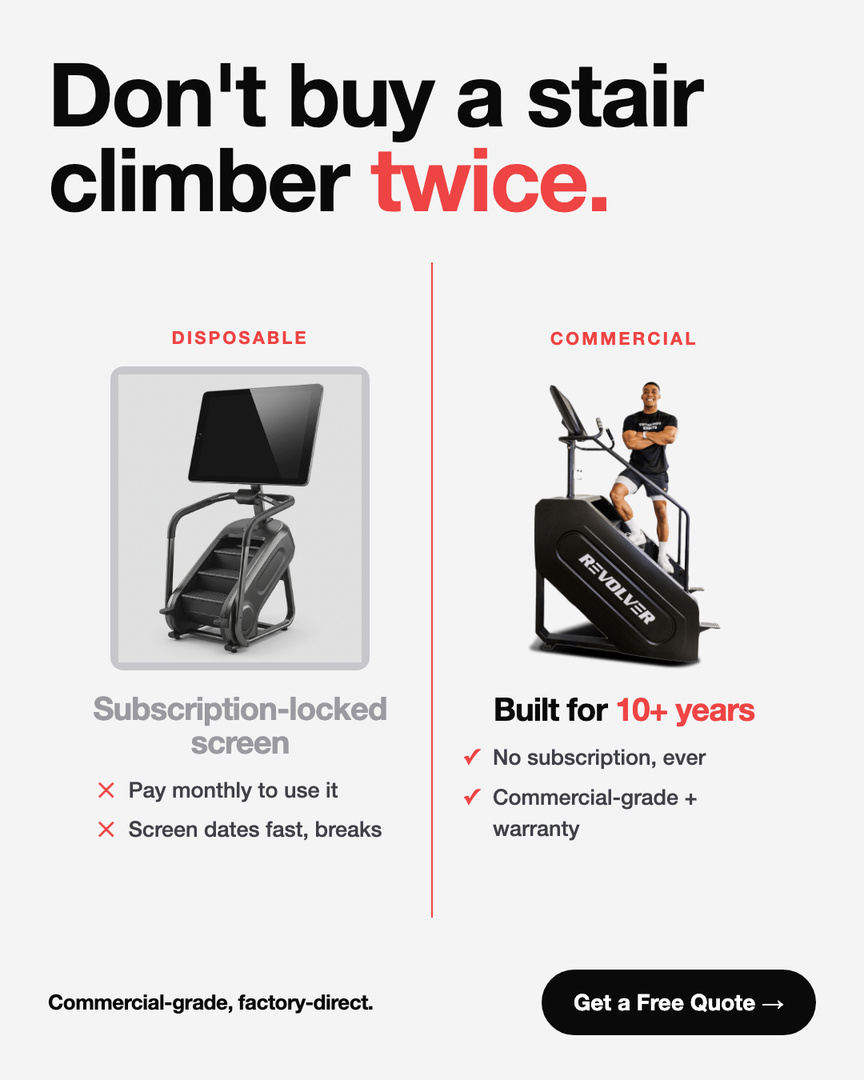
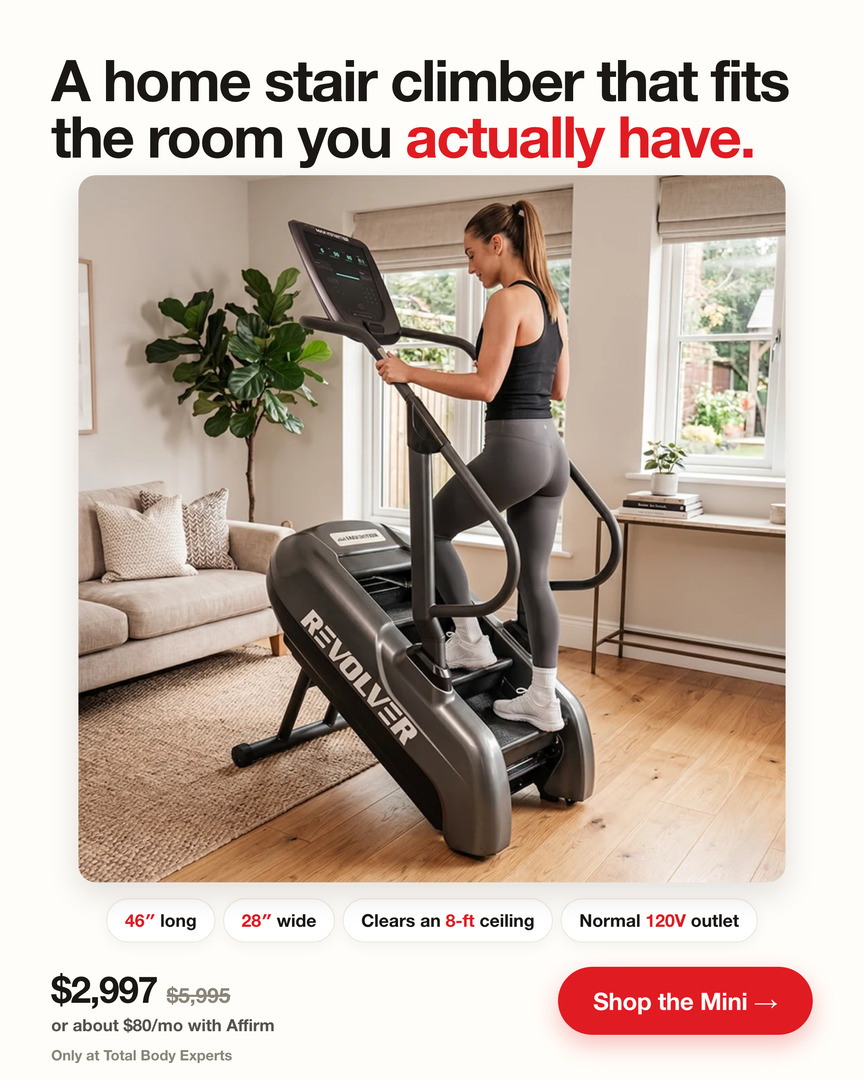
Fig. 3 — Four of the static ads from the engagement. Every angle points to the same survey.
One ad did a different job. Most of the ads open a problem. This one was for people already close to buying, and gave them a reason to act now: a free equipment plan, with a limited number of spots. It pointed to the same survey. The offer changed; the qualifying didn't.
Fig. 4 — Video creative from the engagement.
08 · The result
March to June, on the survey campaign alone.
| 8.9× | Return on ad spend. $99K in closed revenue on $11K of ad spend. |
| 13 | Deals closed through the end of June. |
| 994 | Leads at $13.32 each, every one of them scored, with answers attached. |
| 62% | Of closed revenue came from home buyers, high-ticket residential orders. |
Ad spend covers the survey-funnel campaign only. Published with the client's written approval.
It started fast: the first deals closed inside the first three weeks of the ads going live.
The 62% is the part we didn't plan. The funnel was built for business buyers, and homeowners kept coming through it anyway.
So in May we gave them their own path: the budget question and their own follow-up. By the end of June they were most of the closed revenue.
A survey shows you who is actually buying. That is not always who you built it for.
09 · What we changed after launch
The first version is never the one that wins.
The funnel went live within a week of kickoff. Most of the gains came from what we changed after, one fix at a time, based on what the leads and the sales team told us.
- March – AprilPrices and budget ranges out of the plan, on the sales team's advice.
- MayA separate path for homeowners.
- JunePiece count added to the business path, the clearest read on order size.
- JulySurvey answers written onto the rep's card, so nobody opens a call blind. Video added on the winning statics.
- AugustReps call the fastest repliers first. Product interest added as an optional step, and the order reworked so the question that gives something back comes last.
- SeptemberDeal value sent back to Meta with every lead, so the ad platform learns which leads are worth more, not just which ones fill in a form.
10 · Does this carry to your business?
It's not a fitness funnel. It's a considered-purchase funnel.
Nothing in this build depends on treadmills. It depends on the shape of the sale. If a buyer spends real money, compares options, and talks to someone before ordering, the same system works: questions in front of the form, a score the team can read, a plan sent back instantly, and a follow-up that doesn't rely on anyone remembering.
An illustration, not a client: for a pool and spa dealer, the same questions become pool or spa, backyard type, whether the site is ready, size, budget band, and when they want it installed.
- High-ticket products where a person closes the sale: equipment, golf simulators, pools and spas, commercial kitchens, showrooms.
- More than one kind of buyer for the same catalog.
- Ads already running, or a budget to test them.
- A sales team, even a small one, that picks up the phone.
- Leads nobody calls. The system hands over better leads faster. Someone on your side still has to call them.
- Low-ticket products that sell straight from the cart.
- A product the market doesn't want yet.